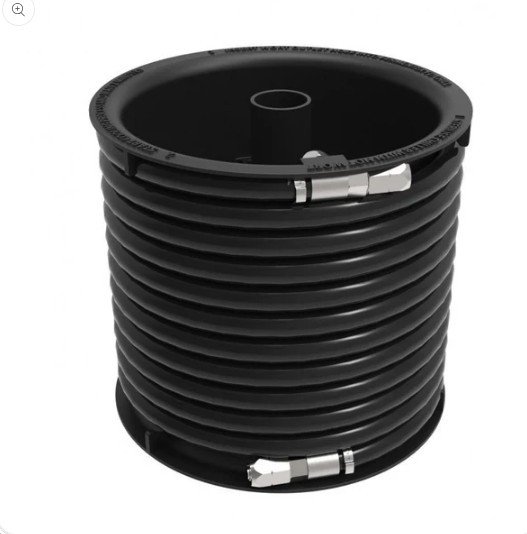
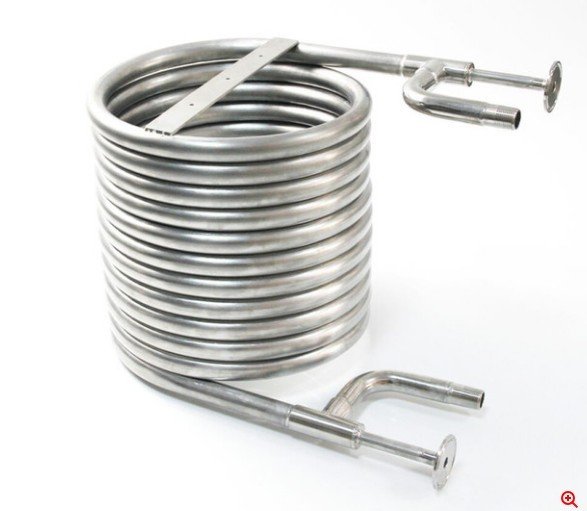
I worked for a company producing homebrew equipment and was amazed by the efficiency and tidy design of the counter-flow chiller, which cools hot wort to room temperature before it enters the fermenter. Below pictures show the general appearance of the counter-flow chiller.
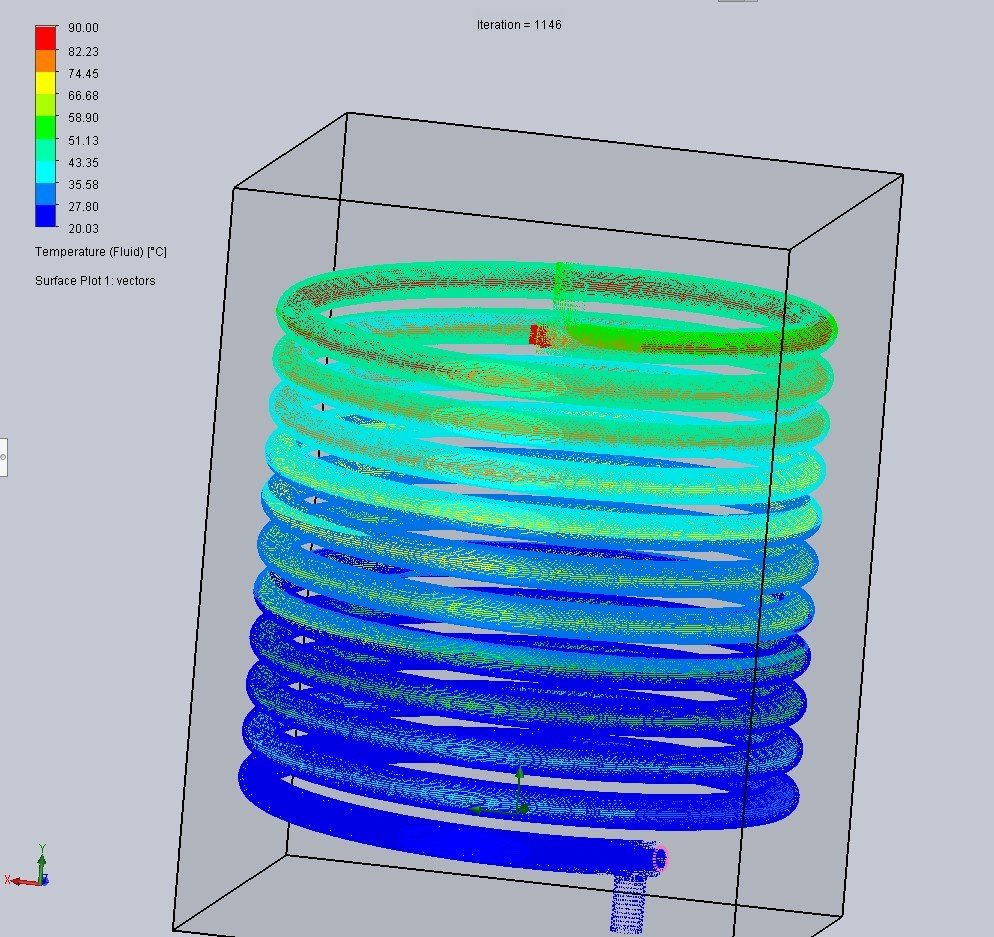
To verify the efficiency through flow simulation, I created a 3D model of a simplified counter-flow chiller as shown below. The cold water enters from the bottom of the chiller and exits from the top, while hot wort enters from the top and exits at the bottom.
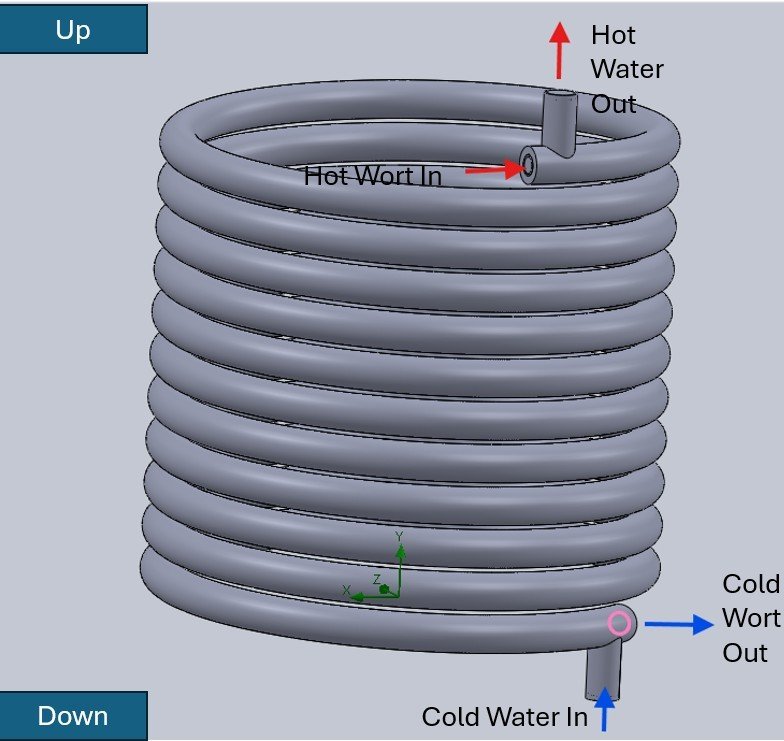
Basic thermal setup parameters:
- Room temperature is 20.05°C, 1 atm
- Wort temperature before entering the chiller: 90°C
- Tap water temperature: 20.05°C
- Length of the coil is ~7m
- Wort flow rate: 3L/min
- Water flow rate: 1.5L/min
- Study type: Internal
- Outer wall thermal transfer conditions: heat transfer coefficient set to 5 W/m²/K
With these flow rates, 23 liters of wort (reduced from 30L after boiling) will transfer to the fermenter in ~8 minutes, using 12 liters of cold water. (Note: As this is a personal study, actual flow rates may vary based on the specific pump used, mash tun, region, and environmental temperature.)
Results of the simulation
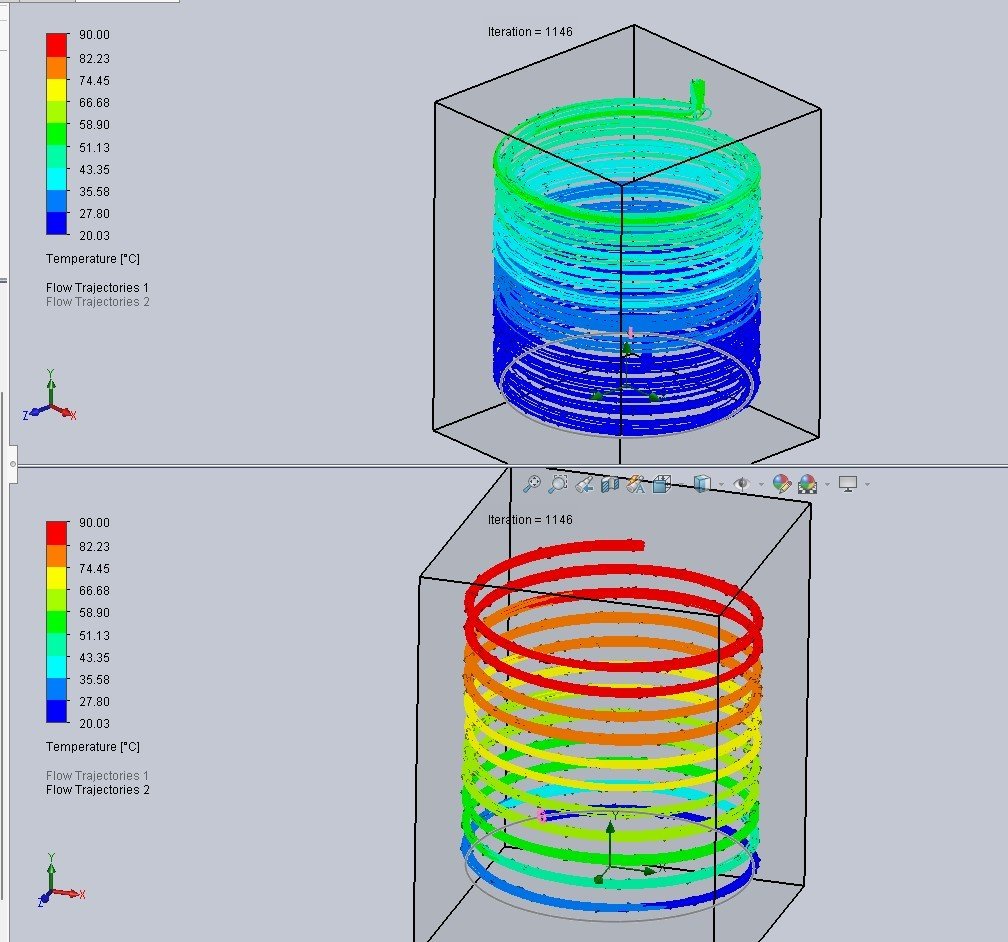
- Water temperature increased to 51.23°C before exiting the chiller
- Wort temperature decreased to 21.65°C before exiting the chiller
- Efficiency calculation: Since the water flow rate is half that of the wort, and their specific heat capacities are similar, the wort capacity rate exceeds the water capacity rate based on the fluid capacity rate equation C=mc. Thus, the efficiency is calculated as:
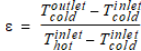
That is (51.23-20.05)/(90-20.05)=14.7%
The high flow rate of the water leads to this low efficiency. A DOE needs to be conducted to find the optimal balance between flow rate and efficiency.
The pictures below show the temperature distribution of water and wort flows. The top image shows water flowing from bottom to top, while the bottom image shows wort flowing from top to bottom.