
Shocked by your power bill this month? Time to think about some alternatives.
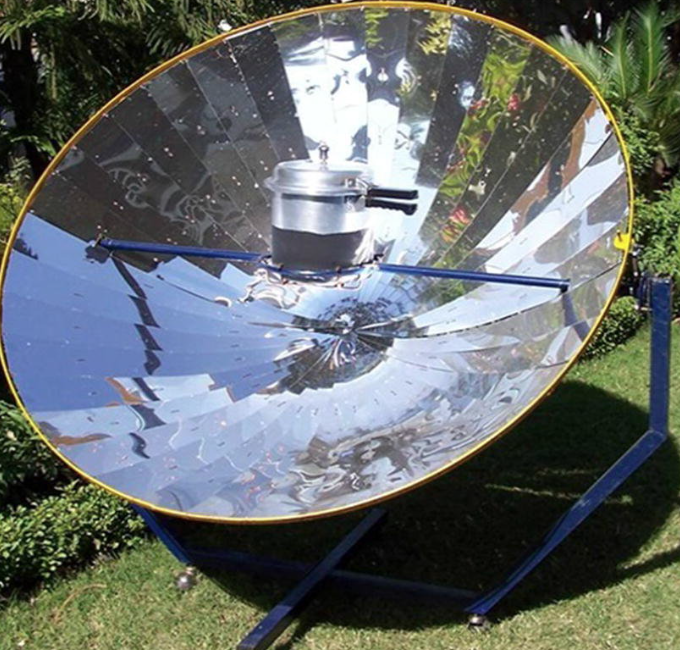
I saw some solar cookers for sale on the internet like this:
I wondered how efficient these could be. To find out, I conducted a simulation using the Solidworks Flow Simulation module. Here are my initial settings after several trials to match real-world conditions:
Initial settings:
- Solar irradiance: 1074W/m². This is the solar irradiance at 13:00 PM in Auckland, New Zealand on January 26, 2025.
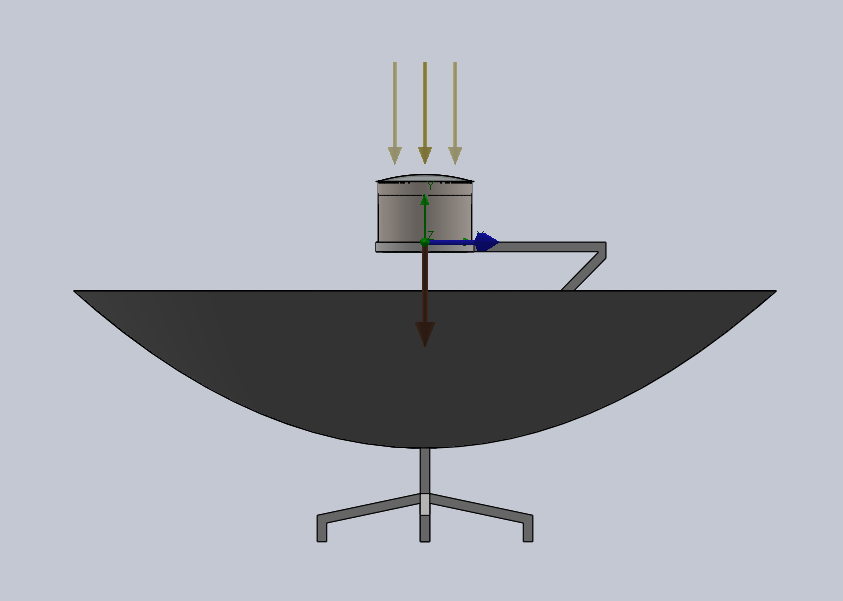
- Direction: To measure the maximum power of this solar cooker, I aligned the solar radiation direction with the axis of symmetry.
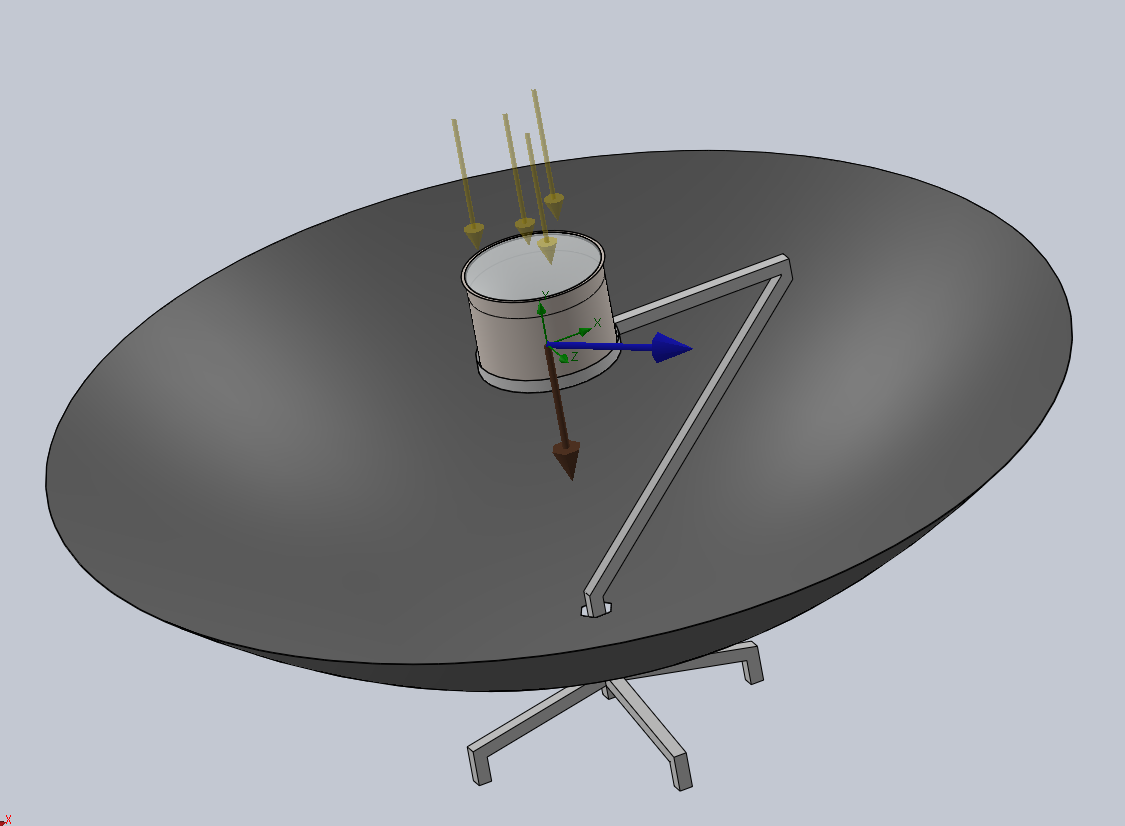
- The reflector has a parabolic shape with a 1.5-meter opening. The radiative surface is set to Symmetry. While I initially planned to use a real surface like polished chrome, this resulted in low power collection due to diffusive reflection.
- The pot measures 200mm in diameter and 150mm in height. It contains water (subdomain) and is made of aluminium with an anodized aluminium radiative surface.
- Ambient temperature is 20°C. All solid parts and the water start at 20°C.
- A simplified design model for simulation as below:
Simulation Result:
- Net radiant rate at the pot’s bottom is ~173W. Note that I designed a ring to hold the pot, which partially covers the bottom.
- The pot bottom temperature reaches ~319°C.

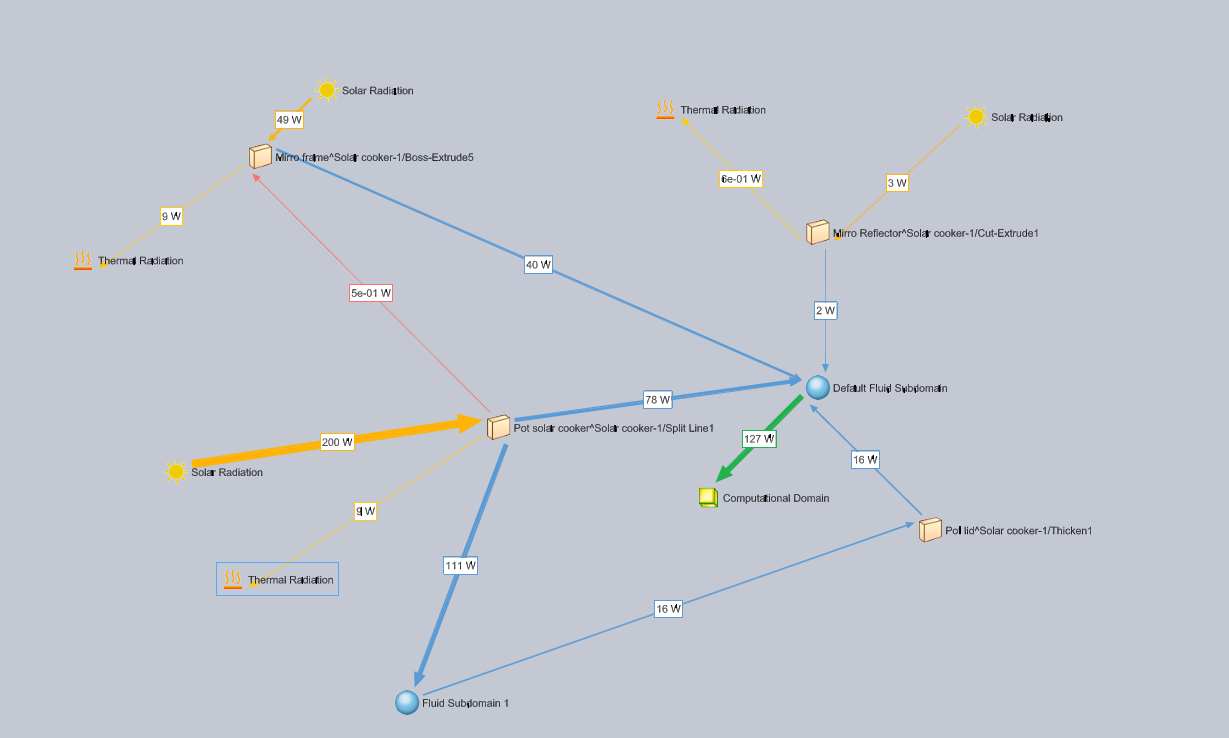
- The picture below shows the solar power distribution. While 200W reaches the pot, only 111W transfers to the water (subdomain). At this power level, the water will take 3 hours and 16 minutes to boil.
Some thinking regarding the result
- My comparison between spherical and parabolic mirrors shows the spherical mirror collects only one-third of the power of the parabolic mirror. Given the low power transfer to the pot, a parabolic mirror is essential.
- The cooker’s design isn’t efficient enough—of 1897W solar power reflected, only 200W reaches the pot. The pot’s position might be the issue, which requires further investigation.
- The environment absorbs a significant portion of the power. We could implement measures to reduce this environmental power loss.
- In real-world conditions, sunlight rarely strikes vertically. The cooker needs a mechanism to track and face the sun directly.