
Outdoor Boys is my favourite YouTube channel. The channel’s creator, Luke Nicols, often camps overnight in the Alaskan winter using a simple tent and a portable wood-burning fireplace. Since I have very little camping experience myself, I became curious: just how warm (or cold) is it inside that tent during those freezing Alaskan nights?
To explore this question and satisfy my curiosity, I ran a thermal simulation based on a simplified model of Luke’s camping setup.
Simulation Settings
- Location: Alaska
- Ambient temperature: –21°C
- Ground temperature: –16°C
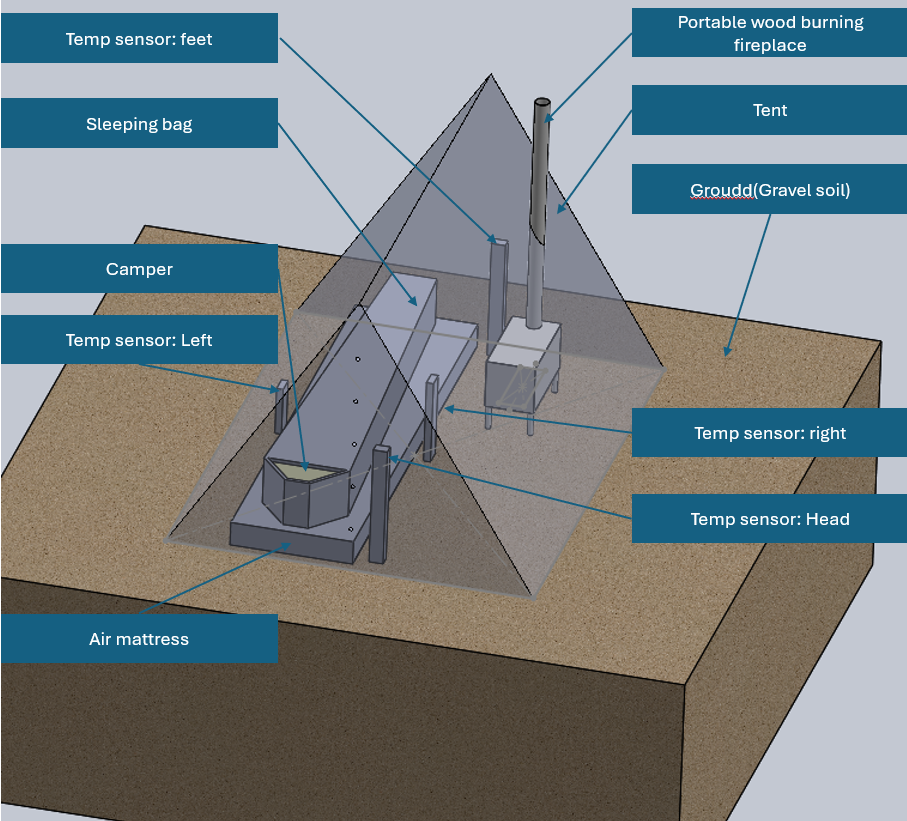
- Temperature sensors placed at: Left arm / Right arm / Head / Feet
Heat Sources
- Luke Nicols (body heat): 37°C
- Portable wood-burning fireplace: Estimated at 2000W (not entirely sure), damper set to 20% open
The image below shows the camping setup. (Apologies—the camper in the sleeping bag may resemble a coffin, but this was simply a modelling choice to make the geometry easier to mesh, with no offence intended to campers!)
Summary of Results
Average temperatures measured at sensor locations:
- Left arm: 11.58°C
- Right arm: 56.72°C
- Head: 22.11°C
- Feet: 22.11°C
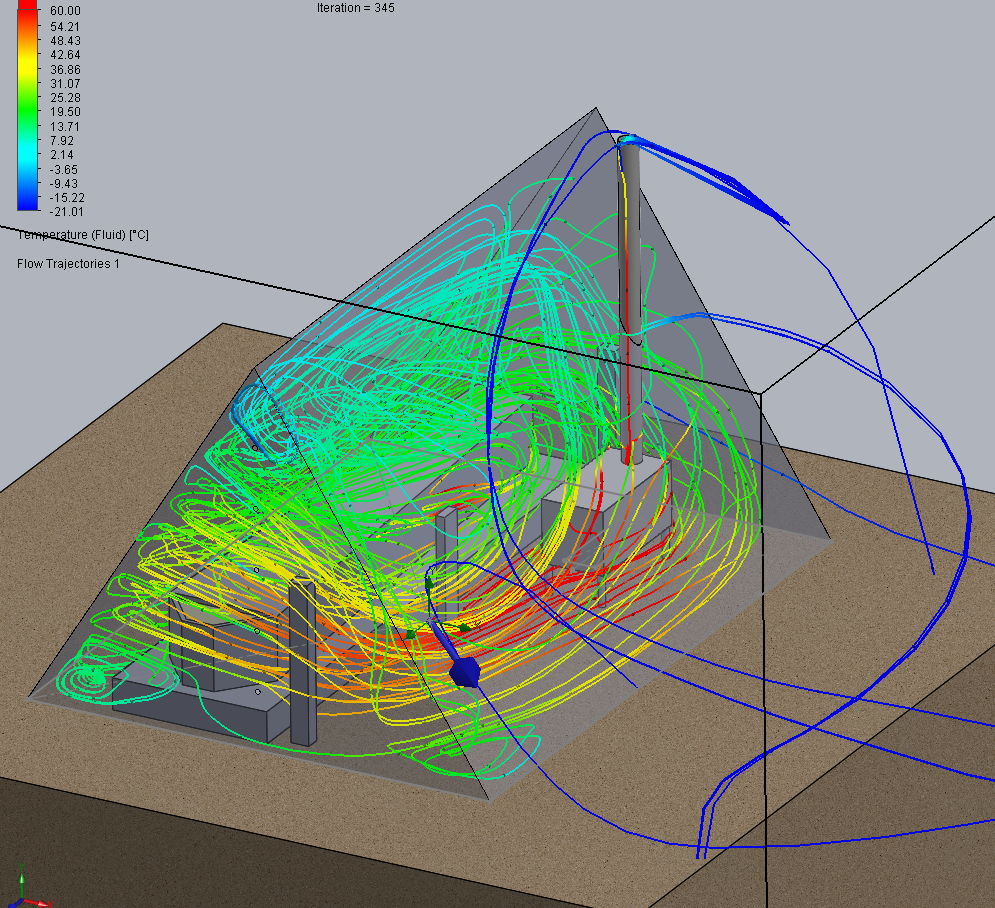
The tent might actually be too warm for a comfortable night’s sleep—especially on the right side! However, the left side of the body might still feel cold.
Air flow
Discussion
- The uneven thermal distribution could make sleeping uncomfortable. The right side, in particular, might get too hot.
- Luke might consider burning less wood and closing the damper a bit more, using a thermal fan to circulate the heat more evenly inside the tent.
- Overall, camping in Alaska during a winter night may not be as extreme as it seems—if done right (and if you’re Luke Nicols, lol).